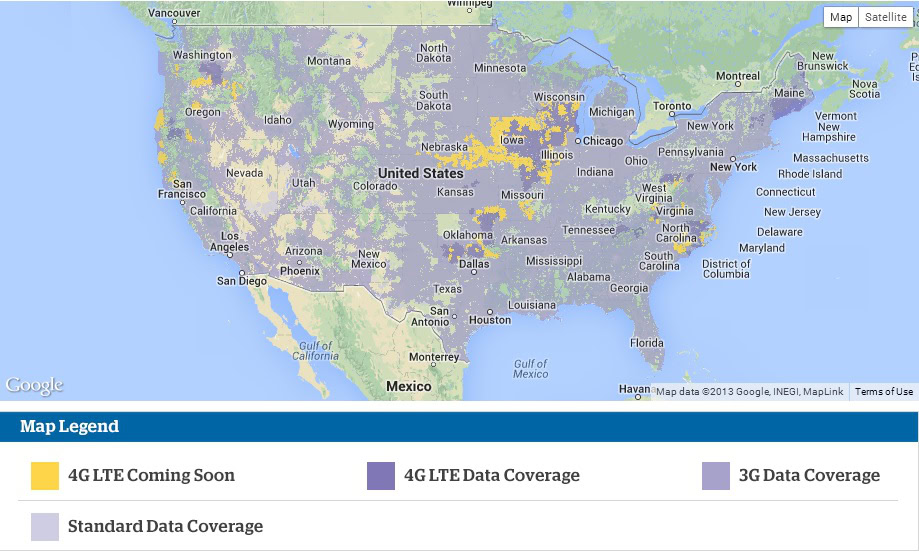
This show that transition of 3G to 4G

Anyone who’s been in the market for a new smartphone recently isn’t
just spoilt for choice when it comes to awesome Android handsets, but
there’s an ever growing range of data packages and network types to
choose from as well.
Of course, you’re likely familiar with the older 3G standard, but
newer handsets are often listed with a variety of “next generation”
communication technologies, advertised as 4G,
LTE,
and sometimes 4G LTE. While that may make them appear virtually
identical on the store shelves, there are actually some drastic
differences between the technology advertised and the actual 4G mobile
communication standard.
All the way back in March 2008, the International Telecommunications
Union-Radio (ITU-R) decided on a set of specifications for its new 4G
standard. The ITU-R is the United Nation’s official agency for all
manner of information and communication technologies, and aims to help
promote and regulate various communication standards across nations.
The ITU-R decided upon a set of requirements for bandwidth, spectral
efficiency, and a load of other technical points, for future 4G
networks. But the most important point for us users is the peak download
speeds, which are defined as 100 Mbit/s for high mobility devices, such
as mobile data speeds on your smartphone while driving in car, and up
to approximately 1 Gbit/s for low mobility local wireless access. To put
that in some perspective, typical current download speeds are often in
the range of 10Mbit/s, while 4G should offer 100 times faster downloads
at a rate of 1Gbit/s.

It’s
a long road, but faster data speeds are heading our way. True 4G could
offer data speeds more than 10 times the current LTE download speeds.
That sounds great, but the ITU-R doesn’t have any control over
implementation. As such, “first generation” 4G technologies, such as LTE
or Mobile WiMAX, have been criticized for not matching up to the full
specification. The reason for this is that other groups, such as 3GPP or
IEEE, who work closely with the technology companies responsible for
delivering the hardware, had already coordinated next-gen technologies
with their members.
LTE-Advanced, the true 4G
It wasn’t until October 2010 that the ITU-R completed an assessment
of six candidates to be considered true 4G technologies. After much
deliberation,
LTE-Advanced
and WirelessMAN-Advanced were designated IMT-Advanced compliant
technologies, and the age of real 4G began. LTE-Advanced is the
technology that we are going to see in western markets, so here’s a
little rundown of what makes LTE-A so special.
Firstly, it’s important to know that LTE-A isn’t just about handset
download speeds, there’s a big push to make improvements to
infrastructure in order to achieve these high download rates. LTE-A aims
to improve data speeds by using a mix of traditional macro cells and
vastly improved small cells. The aim is to offer better high speed
coverage at the network’s edge and more bandwidth, but the transmitters
will have to function on different frequency bands in order to avoid
interference.

The big buzzword with LTE-A is carrier aggregation, which will allow
receiving handsets to make better use of these fragmented bands, in
order to downloaded data faster. The LTE-A standard supports up to 5
carriers and up to 100MHz, which will enable download speeds of over
1Gbit/s. However, launch will only support the aggregation of two 10 MHz
carriers, enabling peak data rates of 150 Mbit/s. The final important
feature is the use of multi-antenna techniques (MIMO) and Coordinated
Multi Point (CoMP) to provide more capacity and more consistent data
rates across cell boundaries. In other words, you will be able to
maintain a more consistant download rate as you move in and out of the
range of transmitters.
However, under pressure from 3GPP and IEEE, HSPA+,WiMAX and LTE were
also allowed to be labelled as 4G technologies despite not offering
these features, as many companies had already begun investing in these
networks during the two and a half year deliberation.
4G imposters
This has left the consumer market in a bit of a mess, allowing
carriers to offer a variety of different “4G” plans for many years,
despite none of them having a network which meets the official
requirements. Let’s breakdown some of the technologies currently being
offered as 4G, and why they don’t match up to the ITU-R standard.

A
quick comparison of the theoretical and real world implementations of
current and future network technologies. All “4G” products currently on
the market are considered “pre-4G”. Source:
Tech Spot
WiMAX
US consumers may remember that Sprint was the first to the “4G”
market with its WiMAX technology. However this was only ever built to
offer customers around 3-6Mbit/s download speeds and upload speeds of
just 1 to 1.5Mbit/s, and was rightly shunned by disappointed consumers.
WiMAX fails to deliver even 1% of the theoretical peak download speed
of the 4G standard created by the ITU-R. Fortunately, Sprint is phasing
out WiMAX support in favour of its new LTE network.
HSPA+
HSPA+ is the pinnacle of current 3G technology, offering a
theoretical 168Mbit/s downlink speed. In reality most HSPA+ coverage is
only capable of 21Mbit/s, with some areas being upgraded to 42Mbit/s and
occasionally even 84Mbit/s. But even the fastest implementation of
HSPA+ is a long way behind the 1Gbit/s download speed required to be
considered a real 4G network. But this hasn’t stopped a number of US
carriers from advertising HSPA+ as 4G.
T-Mobile was one of the first companies to falsely advertise its
HSPA+ network as 4G, and AT&T followed suit shortly after. Arguably
AT&T is even worse, as its network started out with capabilities
peaking at 14.4Mbit/s download and 5.8Mbit/s upload speeds, which is
ridiculously slow for a 4G network. Users in the UK, and some other
countries, will probably have noticed that some carriers actually offer
HSPA+ as part of their 3G network
packages. So it seems that US consumers are being sold and overcharged
to use a slower network under the guise of a next generation technology.
HSPA+ vs. LTE here.
LTE
More recently, carriers have begun to offer LTE options that can
theoretically offer a 100 Mbit/s download speed for mobile devices.
Coverage currently varies depending on your carrier and real world data
speeds are often nowhere this theoretical maximum, and are often
reported to only be a tad faster than HSPA+.

It takes a long time to upgrade an entire network, but LTE is slowing making its way across the US. Source:
US Cellular
To be a little more specific about the
other shortcomings of LTE, other than the lack of download speed, it’s
also lacking in uplink spectral efficiency and speed, and it falls short
of the true 4G capacity of 3.7 bps/Hz/cell, mainly due to the lack of
carrier aggregation
and multi-antenna techniques, which will enable higher speeds. LTE is a
stopgap solution before the real 4G experience reaches us with the
rollout of LTE-A.
Carrier marketing
If all these different technologies weren’t confusing enough,
carriers have been all too keen to exploit the 4G marketing term to
consumers who are seeking faster data speeds. Other than offering
network types which aren’t capable of true 4G speeds, carriers are
beginning to offer compromised 4G packages as they transfer their
existing networks over to LTE. Take a look at AT&T’s current 4G
marketing, which claims to offer users “fast 4G speeds on both the HSPA+
network and on the LTE network”.

Based on this advertisement, you’d assume that LTE was 2.5 times as fast as HSPA+, but the reality is often disappointing.
We already know that HSPA+ is not fast enough to be considered true
4G, and the LTE coverage areas are also surprisingly small. Despite the
PR talk, this “smarter” network essentially means that you’ll be
dropping down to the slightly older HSPA+ network when out of range of
the LTE network, and the small print even states that 4G speeds aren’t
available everywhere either. That doesn’t sound like anything promised
by true 4G or LTE-A.
Fortunately companies openly offer information on their network
coverage, so it’s always worth checking out exactly what coverage and
speed you’ll receive in your area before deciding on a 4G contract.
When can we use “true 4G”?
The bottom line is that technically, no company yet offers a true 4G
experience for consumers, but LTE-A and WM-A aren’t too far away. Having
said that, current LTE data plans are a step above the older 3G
networks and the pre-4G connections, and is definitely what you should
look out for if you’re planning to get a device with a fast, premium
mobile data experience.
The technology is only going to improve with time and, because LTE
and LTE-A are fully compatible, you won’t lose out when companies finish
upgrading their networks.
If you’re planning on waiting for a full 4G experience, you will need
a compatible handset to achieve the full speed. A good example of this
is the Korean version of the
Galaxy Note 3, which makes use of the built in LTE-A modem in the Snapdragon 800 chip. LTE-A is scheduled to start rolling out in the US at
some point this year.